Most bathroom remodels go wrong in the planning, not the tiling. A shower that drains toward the door or a fan that can't clear the steam usually traces back to a question nobody settled before demolition. Here are those questions, with straight answers.
Permits and Scope
Do I need a permit for a bathroom remodel?
That's decided by what changes. Replacing a vanity, a toilet or tile in the same locations is often treated as repair work. Moving plumbing, adding circuits, changing walls or adding a new exhaust duct usually needs a permit. Each building department on the Front Range sets its own rules, so call yours or check its website with your scope written down.
Can we keep using the bathroom during the work?
Not the one being remodeled. If it's the only full bathroom in the house, plan for a stretch of weeks without a shower at home and decide in advance where everyone will go. If you have a second bathroom, protect the path to it, because it becomes the whole household's bathroom.
Showers
Can I have a curbless shower?
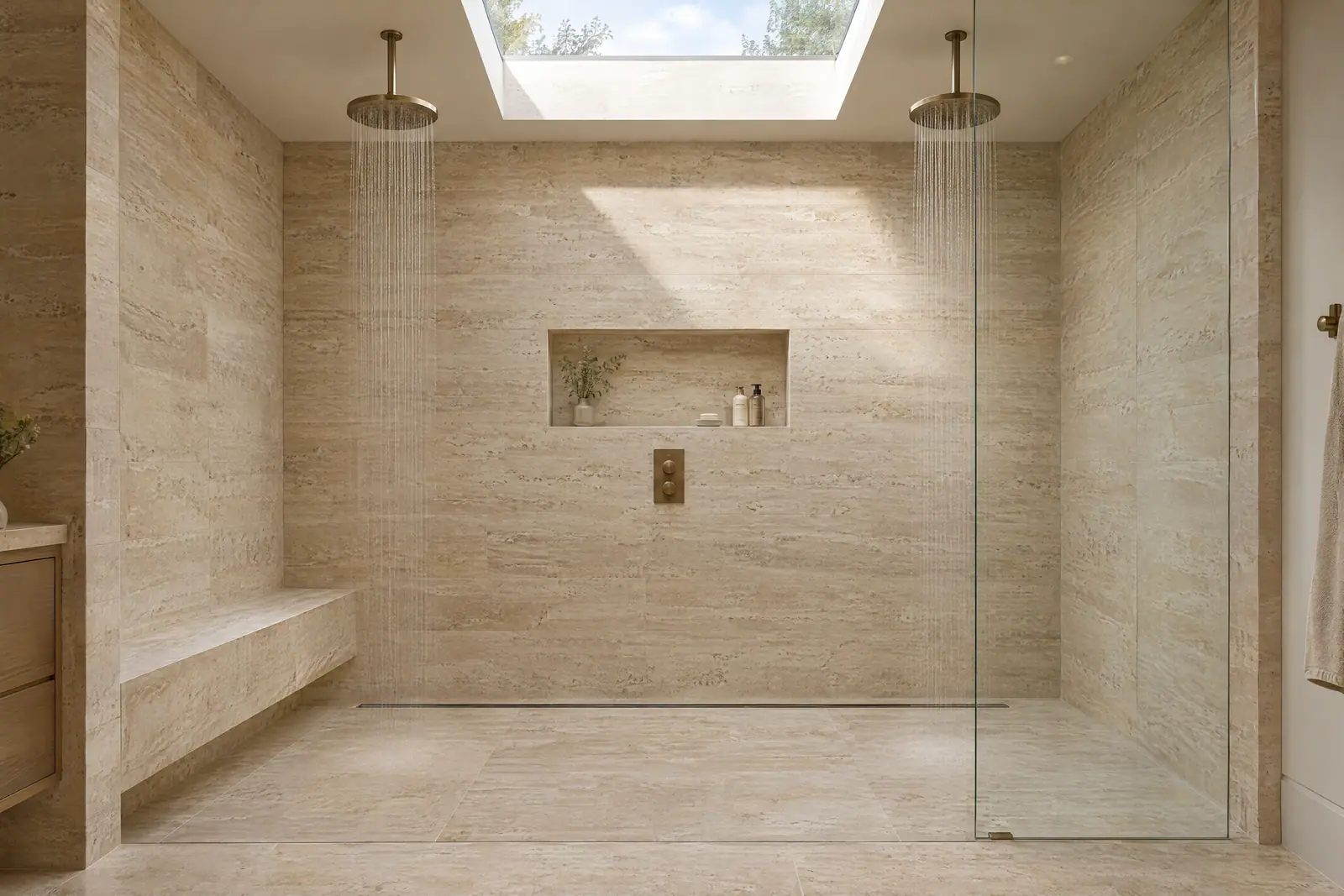
Usually, with planning. The shower floor has to slope to the drain while the bathroom floor stays level at the entry, so the shower area must sit lower than the rest of the room. On a wood-framed floor that can mean recessing or modifying joists, which calls for a structural check. On a concrete slab it means cutting concrete. A linear drain along the back wall makes the slope simpler, because the floor pitches in one direction only.
Is tile waterproof?
No. Tile and grout shed water, but moisture still gets through them. The real waterproofing is the layer underneath: a sheet membrane or a liquid-applied membrane over the backer board, carried up the walls and bonded to the drain. Ask which system will be used and whether the shower will be flood tested before tile goes on. A flood test means plugging the drain, filling the shower pan with water and checking a day later that the level hasn't dropped.
Should I add blocking for grab bars now?
Yes, even if nobody needs grab bars today. Solid wood blocking between the studs is quick to install while the walls are open, and it lets you mount a grab bar or a fold-down shower seat almost anywhere later without hunting for studs.
Ventilation and Electrical
How big should the exhaust fan be?
The International Residential Code sets a minimum of 50 cubic feet per minute for a bathroom fan that runs intermittently. The Home Ventilating Institute's guideline for bathrooms up to 100 square feet is 1 cubic foot per minute for each square foot of floor, with larger bathrooms sized by their fixtures. Either way, the fan only performs if the duct is short, correctly sized and vented to the outside, never into the attic.
A humidity-sensing switch or a timer helps, because most people turn the fan off too soon. Colorado's dry air lets a bathroom dry out quickly, but in winter steam still condenses on cold exterior walls and windows.
What electrical changes are worth making?
Bathroom receptacles need GFCI protection under the National Electrical Code. Beyond that, consider outlets inside a vanity drawer or medicine cabinet for toothbrushes and hair tools, lighting at face height on both sides of the mirror, and enough circuit capacity for a heated floor or towel warmer if either is on your list.
Tubs and Layout
Should I remove the tub?
If the house has another tub, converting this one into a larger shower makes sense for a lot of households. If it's the only tub in the house, think about who might live there later, since families with small children often look for one. Our view: keep the last tub in a house unless you're certain you won't miss it.
Can I move the toilet?
You can, but it's one of the bigger changes in a bathroom because the drain is large and needs slope. On an upper floor, the direction of the joists limits how far it can move. On a slab, moving it means breaking concrete. If the current location works, leave it and put the effort somewhere you'll notice it every day.
Is winter a bad time for a bathroom remodel?
No. The work is indoors and the weather barely touches it. Order fixtures and tile early, and if the bathroom needs to be ready for holiday guests, set the finish date with some margin built in.
Planning a new shower, a layout change or a full primary bath? See how we plan bathroom remodeling projects