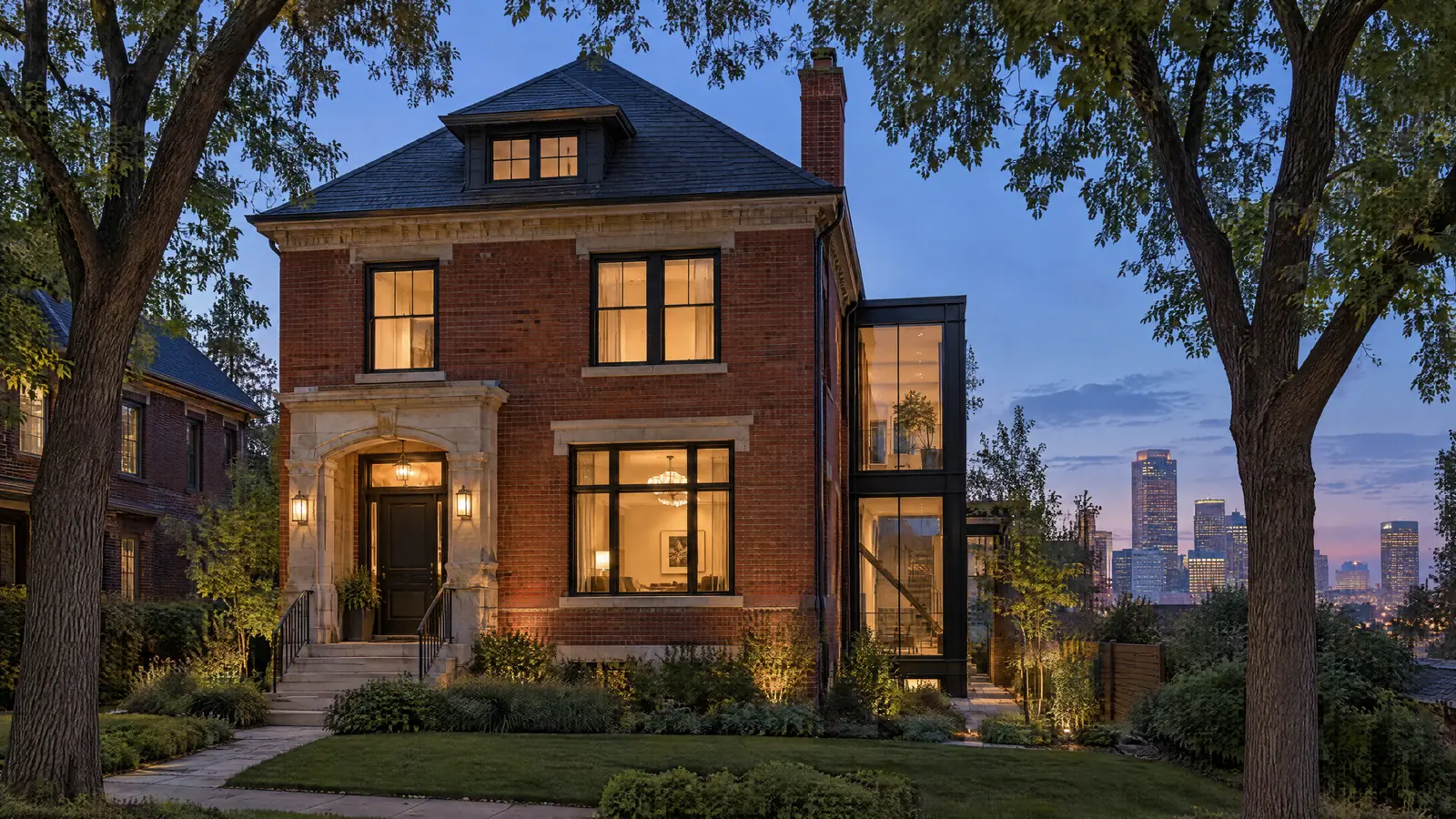
Englewood home remodeling, in the small Arapahoe County city just south of Denver along South Broadway, starts with one question most homeowners never think to ask: are you actually in Englewood? This page covers that address problem, the city's own permit office and water utility, the neighborhoods from Arapahoe Acres to Cherrelyn, and how to make Englewood's compact older houses work harder without outgrowing their lots.
An Englewood Address Doesn't Mean an Englewood Permit
The Englewood mailing address covers far more ground than the city does. Homes in Cherry Hills Village, Greenwood Village, Centennial and unincorporated Arapahoe County carry Englewood addresses, and so do some parcels across the line in Douglas County. Each of those places permits its own work.
Inside actual city limits, residential building permits come from the City of Englewood's building division. Outside them, the same address could send drawings to a different city with a different adopted code, or to the county.
Englewood also runs its own water and sewer utility. A remodel that reuses existing lines rarely involves it, but an addition with new bathrooms or a larger service line is a question for the city's utility, not Denver Water.
Remodeling Homes Across Englewood's Neighborhoods
Englewood is compact, and most of its houses are too. The typical lot is modest and the typical home was built between the 1920s and the 1950s.
- Arapahoe Acres: a mid-century modern subdivision built from 1949 into the late 1950s and listed on the National Register of Historic Places.
- Cherrelyn: older streets in south Englewood named for the horse-drawn streetcar that once ran up Broadway.
- The blocks behind South Broadway: brick bungalows and small post-war houses close to the city's original downtown.
- CityCenter Englewood: the redevelopment on the former Cinderella City mall site, with apartments by the light rail station.
- The medical district around Swedish Medical Center and Craig Hospital, where older houses sit beside hospital campuses.
Remodeling Arapahoe Acres and Englewood's Mid-Century Homes
Arapahoe Acres is the reason architecture fans know Englewood. Its houses use flat or low-slope roofs, exposed beams, clerestory windows and walls of glass facing private yards. National Register listing alone generally doesn't restrict what a private owner does with private funds, but ask the city whether any local designation or neighborhood covenant applies before planning exterior changes.
The bigger challenge is physical. These houses were designed without the attic and basement spaces where remodelers usually hide things.
That kind of planning is the core of our custom interior remodeling for mid-century homes, where the existing design is the brief.
Making Small Englewood Houses Work Harder
A bungalow behind South Broadway with one bathroom and a galley kitchen has three ways to grow. Each trades something.
If the lot has rear yard to spare
Then a single-story rear addition for a primary suite keeps the street face unchanged.
If the house has a full basement with workable height
Then a second bathroom below grade usually costs less of the lot than an addition.
If the lot is tight and the basement is shallow
Then rework the existing footprint: borrow a closet or hall for the bath, and open the kitchen into the dining room.
Small houses reward precise bathroom remodeling in Englewood, where a few inches of layout decide whether a shower fits.
Living in a compact Englewood bungalow or an Arapahoe Acres modern? Start with what the lot and the structure allow. Talk with us about your Englewood home
For metro-wide questions about soils and radon, see the Denver Metro remodeling guide. Just south and east, our Littleton and Cherry Hills Village pages cover very different housing stock.