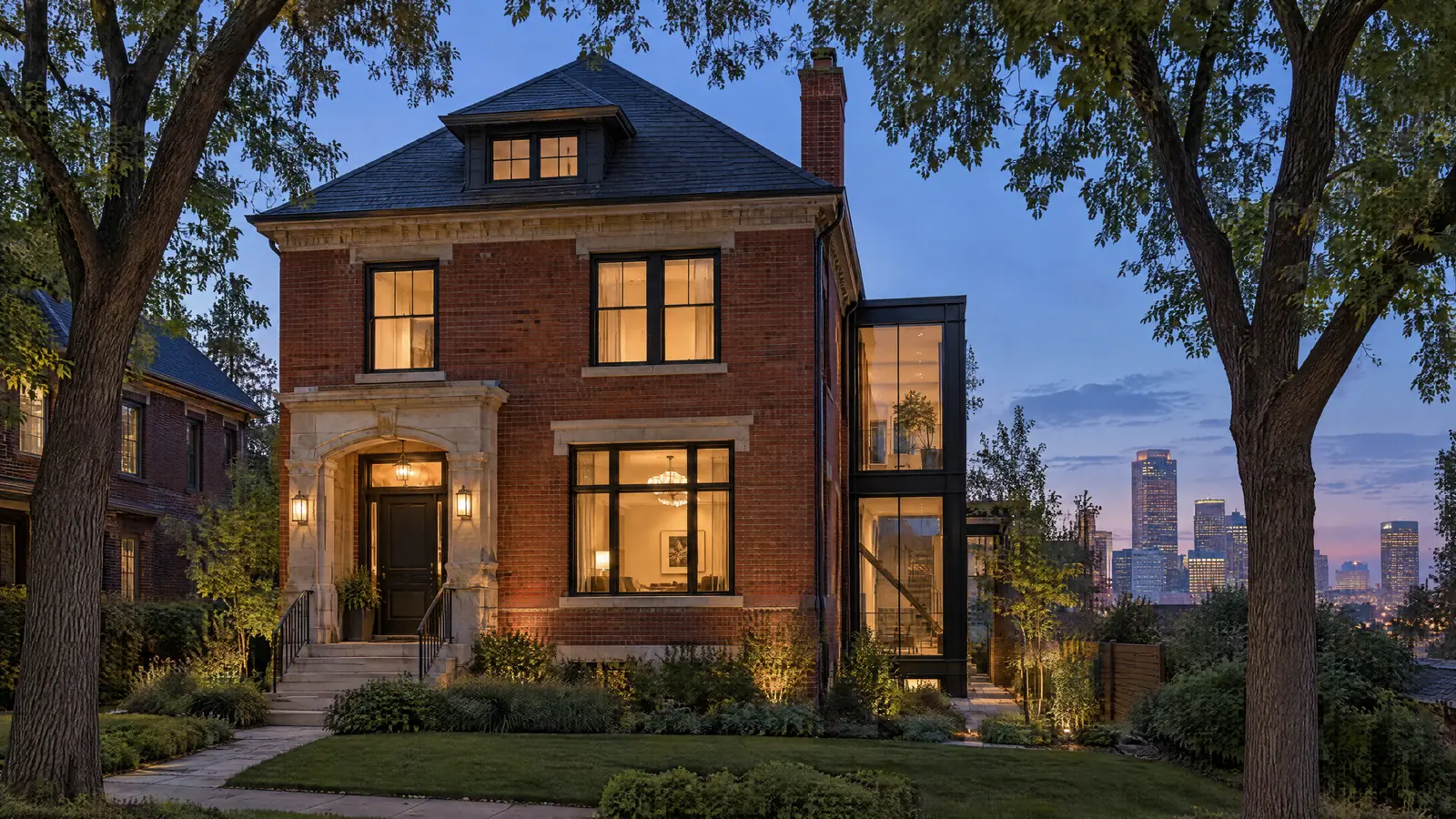
Commerce City home remodeling covers an Adams County city with two very different housing stocks: small mid-century homes in the older south end around Derby, and the master-planned subdivisions that have spread north toward the Rocky Mountain Arsenal National Wildlife Refuge since the early 2000s. This page covers who permits remodels and who supplies water and sewer, the city's neighborhoods, and the remodels each half of the city tends to need.
Commerce City Permits, and the Utilities That Aren't the City's
For homes inside city limits, residential building permits come from Commerce City's building safety division. Unincorporated Adams County pockets sit near the city's older southern end, and parcels there are permitted by Adams County instead, even where the street feels continuous.
Water and sewer are a separate question. Much of Commerce City is served by the South Adams County Water and Sanitation District, an independent district, not a city department. A kitchen or bath that reuses existing lines rarely involves it. An addition with new fixtures, or a basement bathroom that changes how much the house sends to the sewer, can.
Remodeling Homes Across Commerce City's Neighborhoods
Commerce City reads like two towns: an older south end and a newer north, linked by long arterials past open land and the edge of the wildlife refuge.
- Derby: the historic commercial core of the south end, surrounded by small ranches and cottages from the 1940s and 1950s.
- Adams City: one of the original communities that became part of Commerce City, with older homes on modest lots.
- Reunion: a large master-planned community in the north, built from the early 2000s, with HOA and metro district oversight.
- Buffalo Run: homes around the Buffalo Run golf course near Reunion.
- The Northern Range: the city's name for its growing northeast, where new subdivisions are still being built.
The south end sits close to the South Platte River corridor, rail lines and industry. The north end looks out over the prairie toward the refuge. Both shape what owners want from a remodel: in the south, more space from a small house; in the north, better finishes in a house that's already the right size.
Updating Mid-Century Homes in the South End
A 1950s Derby ranch usually has a compact kitchen, a single bathroom, small bedrooms and an electrical panel sized for a different century of appliances. Many have seen decades of owner improvements. Before a remodel adds anything, pull the permit history for the address. Additions, enclosed porches or basement rooms that never had a permit can turn up during inspection and become part of the project.
The common upgrades follow from the house: a service upgrade to carry a modern kitchen, a second bathroom carved from a bedroom or added at the rear, and new supply lines where the old ones are original.
Upgrading Builder-Grade Homes in Reunion and the Northern Range
Production homes from the 2000s and 2010s were built to a price, and owners now replace the parts that show it. This is where kitchen remodeling in Commerce City and bath work earn their keep.
| Item | Typical builder spec | Upgrade direction |
|---|---|---|
| Cabinets | Stock boxes in particleboard, limited sizes | Plywood boxes, full-height uppers, custom sizing to the room |
| Countertops | Laminate or entry-level granite | Quartz or natural stone with a planned seam layout |
| Shower | Fiberglass tub and shower unit | Tiled shower over a continuous waterproofing membrane |
| Lighting | One ceiling fixture per room | Layered recessed, task and accent lighting |
| Basement | Unfinished, with a plumbing rough-in stub | Finished living space planned around the mechanicals |
More on that in our guide to basement finishing for Commerce City homes, and the Denver Metro remodeling guide covers radon and soils. Neighbors to the north are on our Thornton and Brighton pages.
Ready to finish the basement or replace builder-grade finishes in your Commerce City home? Start with a look at what's already there. Plan a Commerce City consultation