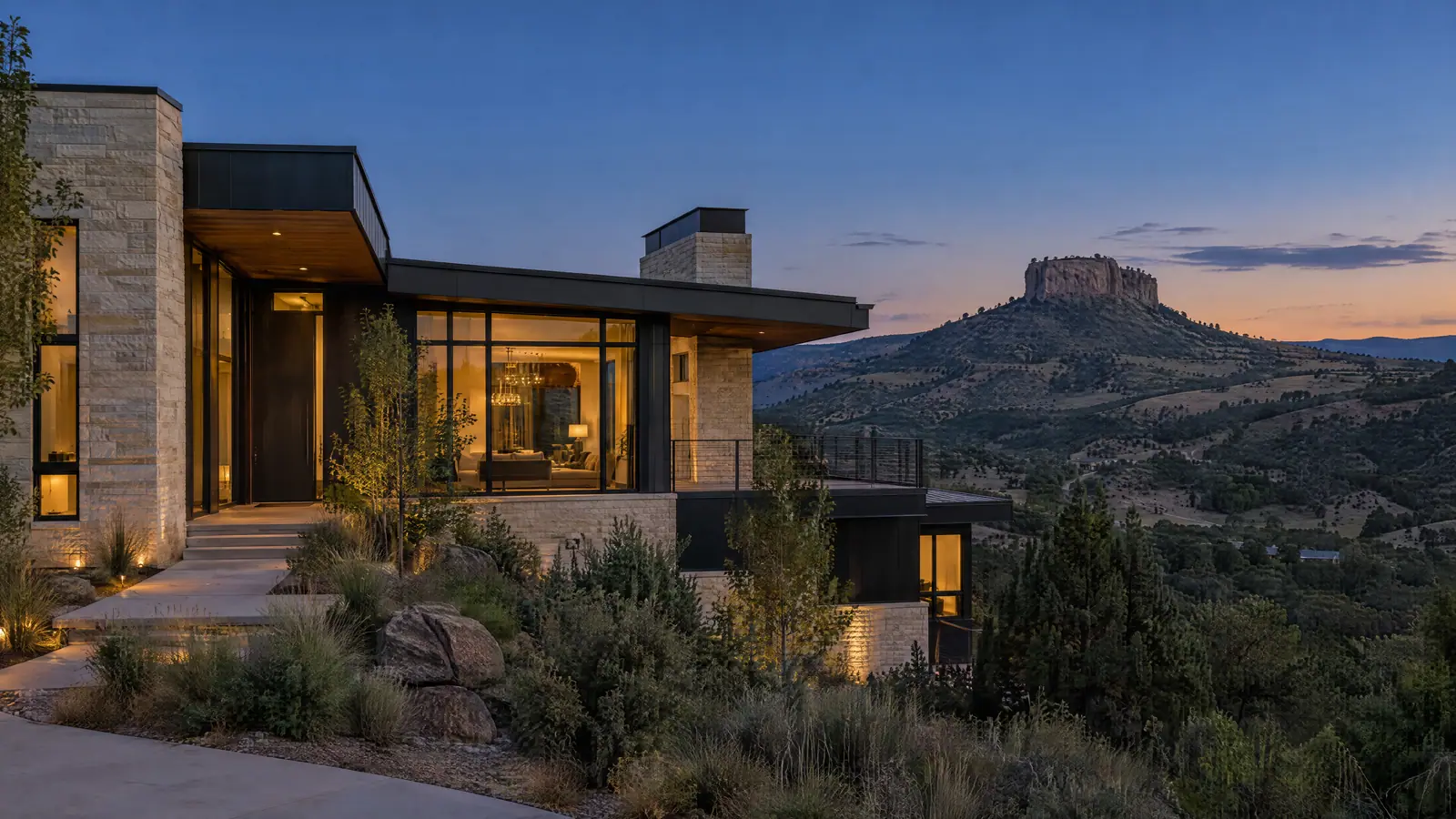
Lone Tree home remodeling happens in one of the youngest cities in the Denver area. Lone Tree incorporated in 1995, annexed Park Meadows mall in 2007, and is still building RidgeGate, a planned community of roughly 3,500 acres on both sides of I-25. That mix of established gated neighborhoods, newer production homes and attached housing near light rail shapes what remodels here involve. This page covers the city's permit process, how its boundaries have moved, its neighborhoods, and the specific problems of remodeling a townhome or condo. For Douglas County soils, radon and HOA basics, see our Douglas County remodeling guide.
Lone Tree's Building Division Takes Applications Online Only
The City of Lone Tree Building Division handles building services directly: plan review, permits and inspections. Applications are accepted only electronically through the city's Accela portal, which is also where you check status and schedule inspections. There's no paper counter to walk drawings into, so the drawings need to be complete PDFs before submittal, not a sketch someone explains in person.
Remodeling Homes Across Lone Tree's Neighborhoods
Lone Tree's housing runs from gated, established neighborhoods to construction that is still underway, and each group tends to bring a different kind of project.
| Neighborhood | Character | Typical remodel focus |
|---|---|---|
| Heritage Hills | Gated, larger homes, private clubhouse | Kitchens and primary suites rebuilt to a higher finish level |
| Carriage Club | Established detached homes, mature trees, conventional lots | First full updates of original kitchens and baths |
| Wildcat Ridge and Montecito | Luxury detached homes, Montecito with Tuscan-inspired styling | Custom interiors, lower levels, style updates |
| RidgeGate and Lyric | Newer construction; Lyric is RidgeGate's first large village east of I-25, with condos, townhomes and detached homes | Personalizing builder finishes, basements, attached-home interiors |
In the established neighborhoods, a Lone Tree kitchen remodeling project is usually the anchor of a broader update.
Bluffs, Mountain Views and West-Facing Glass
Lone Tree sits around 6,280 feet, and Bluffs Regional Park, about 235 acres of open space with a loop trail, gives many nearby homes long views west to the Front Range. Owners want more of that view, and the obvious move is a bigger opening on the west wall.
Where this goes wrong is the glass. Late-day sun on large west-facing windows drives heat gain and glare into exactly the rooms people use in the evening. Low-solar-gain coatings, exterior or interior shading, and enough cooling capacity for the room belong in the design from the start. A wider opening in an exterior wall is also a structural change: it needs a header sized for the load above, and in a gated or covenant-controlled neighborhood, the new window size and frame color may need association approval too.
Remodeling a Townhome or Condo Near the Light Rail
Lone Tree has five RTD light rail stations, ending at RidgeGate Parkway, the southernmost on the system, and much of the newer housing near them is attached. Remodeling an attached home is a different exercise from remodeling a detached one, and the differences are mostly invisible until a wall is open.
Inside those limits, there's still room for real change: reworked kitchens, rebuilt baths and custom interior remodeling for a Lone Tree townhome that makes a compact plan work harder.
West of the city, Highlands Ranch answers to Douglas County and its own community association; see our Highlands Ranch remodeling page.
Planning a remodel in Heritage Hills, RidgeGate or anywhere in between? Tell us about your Lone Tree home
Our remodeling process starts with the jurisdiction and association questions this page raises.