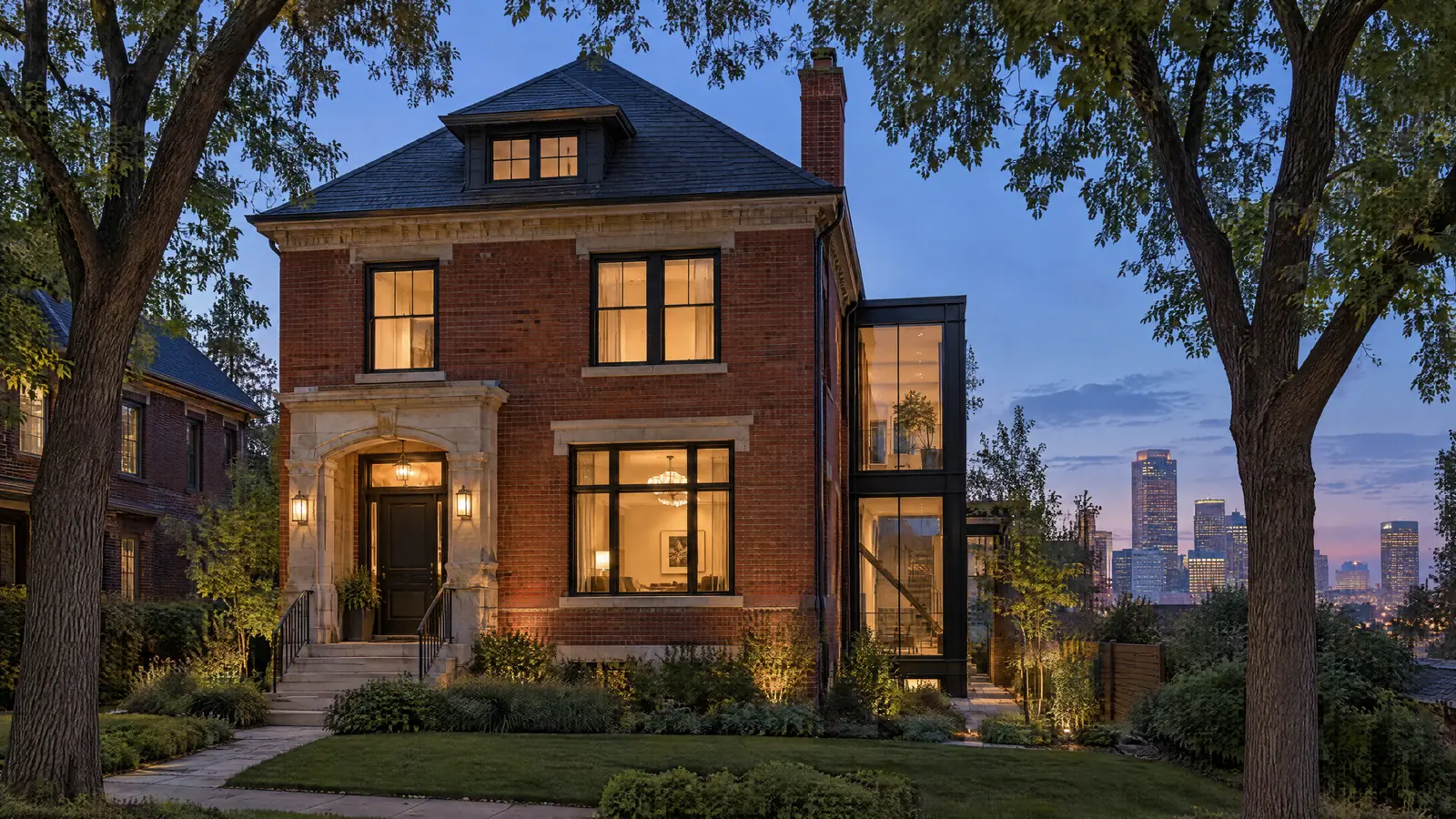
Wheat Ridge home remodeling covers a Jefferson County city of roughly nine square miles between Denver, Arvada and Lakewood, incorporated in 1969 and once known as the Carnation City for its commercial flower growers. Its farm and greenhouse past left something rare this close to Denver: mid-century ranches on large lots. This page covers Wheat Ridge permits, the Clear Creek floodplain, the patchwork of water and sanitation districts, and how to grow a ranch house on a lot with room to spare.
Wheat Ridge Permits and the Clear Creek Floodplain
Inside city limits, residential building permits come from the City of Wheat Ridge's building division within its Community Development department. Next door, Applewood is unincorporated Jefferson County, even though many of its homes look and feel like Wheat Ridge. Applewood parcels are permitted by the county.
Clear Creek crosses the middle of the city from west to east, and Lena Gulch joins it from the south. Homes near either can sit inside a mapped floodplain, and work on those houses carries a review step that most remodels never see.
Water and Sewer Districts Vary by Street
Wheat Ridge doesn't run one utility for the whole city. Water service is split among providers such as Denver Water, Consolidated Mutual Water and Valley Water District, and sewer service among several sanitation districts. Two houses on the same block can answer to different districts.
For a remodel that reuses existing connections, that rarely matters. For an addition with new bathrooms or a larger service line, find out which districts serve the parcel and what each requires before the plan is final.
Remodeling Homes Across Wheat Ridge's Neighborhoods
Wheat Ridge's neighborhoods are less formally named than Denver's, and most residents describe home by the nearest corridor or park.
- The 38th Avenue corridor, branded Ridge at 38, the city's main street, lined by older ranches and small post-war homes.
- Fruitdale, on the city's west side, home to the historic Fruitdale School building.
- The Clear Creek greenbelt, where homes back onto open space and the trail.
- Clear Creek Crossing, the newer development along I-70 on the city's west side.
- Applewood, the unincorporated neighbor to the west.
Most of the housing is single-story: brick and frame ranches from the 1940s through the 1960s, with a scattering of older farmhouses and some infill construction.
Growing a Wheat Ridge Ranch on a Large Lot
The large lot changes the math. Where a Denver bungalow has to go up, a Wheat Ridge ranch can often go out, and single-level living is what many owners want to keep.
| Approach | What it gains | What to check first |
|---|---|---|
| Rear single-story addition | Primary suite or family room on the main floor | Setbacks, floodplain status, roof tie-in to the existing low-slope roof |
| Reworking the existing plan | Open kitchen and living space without changing the footprint | The central bearing wall most ranches carry down the middle |
| Finishing the basement | Guest rooms, a second bath, storage | Ceiling height, egress, water history near the creek |
Most ranches here run a bearing wall down the long axis of the house, so the kitchen-to-living opening usually needs a beam. An addition makes a natural home for a new primary bath, which is where bathroom remodeling in Wheat Ridge meets the addition plan, and the reworked core is where kitchen remodeling for a Wheat Ridge ranch starts.
Have a Wheat Ridge ranch with room to grow? Bring the lot survey and we'll start with what the site allows. Start a Wheat Ridge remodeling conversation
For soils, radon and metro-wide permitting, see the Denver Metro remodeling guide. Neighbors north and south are on our Arvada and Lakewood pages.